Source Semiautomatic C Frame Power Press for Watch Case Making
Find and compare 30 semiautomatic c frame power press options from Chinese manufacturers. These machines support punching, riveting, and stamping with high precision and energy-saving features for industrial applications; compare the available evidence and request quotations based on your requirements.
Key considerations
Products List




Comprehensive Sourcing Guide
Semiautomatic C Frame Power Press Sourcing Guide
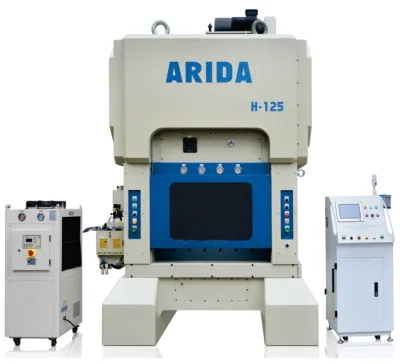
Sourcing a semiautomatic C frame power press requires careful evaluation of the machine's automation level and structural integrity. The observed market data indicates that these units often feature hydraulic power systems with adjustable speeds, allowing for versatile operations in punching, riveting, and stamping. Buyers must distinguish between fully automatic and semiautomatic configurations, as the latter typically relies on operator intervention for material loading while maintaining high precision through servo motor control.
The structural design of these presses is critical for maintaining accuracy during high-volume production cycles. Many available models utilize a C-type frame constructed from high steel alloy casting, which provides the necessary rigidity to withstand significant tonnage without deformation. When evaluating listings, procurement teams should verify that the slider movement mechanism aligns with specific application needs, such as single or triple action, to ensure the machine can handle the intended workload efficiently.
Product Scope and Observed Listing Signals
The product scope for semiautomatic C frame power presses spans a wide range of tonnage capacities, with observed listings featuring units up to 300 tons. These machines are frequently marketed for specialized applications such as watch case and tableware manufacturing, where high precision and consistent forming are paramount. Buyers should note that while some models are labeled as general punching machines, others are specifically engineered for high-speed operations, necessitating a clear definition of the intended production environment before selection.
Listing signals often highlight key selling points like high accuracy and energy-saving capabilities, with some units claiming up to 70% energy reduction compared to traditional mechanical drives. However, the observed data reveals a mix of power sources, including both hydraulic and mechanical drive options, which can significantly impact operational costs and maintenance requirements. Procurement specialists must scrutinize these signals to ensure the machine's power source matches the facility's infrastructure and the specific demands of the production line.
Technical Specifications to Verify
Technical verification begins with the control system, where the presence of a Mitsubishi PLC and Schneider main electronic components suggests a robust automation architecture. Buyers should confirm that the servo motor is compatible with the specific phase requirements of their facility, as the observed data indicates phase-specific motor configurations. Additionally, the precision rating of 0.02 mm is a critical benchmark for high-tolerance applications, and this figure must be validated against the actual performance of the slider drive mechanism under load.
The physical dimensions and standard configurations of the press frame are equally important for integration into existing production lines. Observed specifications list standard dimensions around 120011651895 mm, but these can vary based on the specific model number, such as YHC1 or YHB1. It is essential to verify the punch shape, whether open or semi-open, and the slider movement type, as these factors directly influence the machine's versatility in handling different material thicknesses and forming geometries.
Compliance and Safety Documentation
Compliance documentation is a non-negotiable aspect of sourcing industrial machinery, with certifications like CCC, ISO9001, and CE being standard indicators of regulatory adherence. Buyers must ensure that the supplier provides valid certificates for the specific model being purchased, as the observed data shows variations in certification lists, including SGS and RoHS compliance. These documents serve as proof that the machine meets international safety and quality standards, reducing liability risks during installation and operation.
Safety features are often embedded in the design, such as the magnetic valve systems from Rexroth, which ensure reliable control of hydraulic functions. However, the presence of these components does not automatically guarantee safety; buyers must verify that the machine includes all necessary safety guards and emergency stop mechanisms required by local regulations. The warranty period, observed as either 12 or 24 months, should also be clearly defined in the contract to cover potential safety-related defects or failures during the initial operational phase.
Cost Drivers and Commercial Terms
Cost drivers for semiautomatic C frame power presses are heavily influenced by the complexity of the control system and the quality of the structural frame. Units featuring advanced servo motors and high-precision components often command higher prices, with observed ranges extending from $1,000 to $266,000 depending on tonnage and customization. Buyers should analyze the total cost of ownership, including energy consumption and maintenance, rather than focusing solely on the initial purchase price, as energy-saving features can significantly reduce long-term operational expenses.
Commercial terms such as minimum order quantity (MOQ) and lead times are critical for supply chain planning, though observed data suggests an MOQ of 1 unit for many suppliers. Packaging standards, ranging from standard packing to wooden cases and pallets, also impact shipping costs and the condition of the machine upon arrival. Procurement teams must negotiate clear terms regarding delivery, installation support, and after-sales service to ensure a smooth transition from purchase to full production capacity.
Supplier Qualification and Quality Control
Supplier qualification requires a thorough assessment of the manufacturer's location and production capabilities, with Dongguan City, Guangdong Province, China, being a prominent hub for these machines. Buyers should verify the supplier's track record in producing semiautomatic presses and their ability to provide consistent quality across different batches. The presence of a 24-month warranty on some models indicates a higher level of confidence in product durability, which should be a key factor in supplier selection.
Quality control processes must be transparent and documented, with suppliers expected to provide test results and inspection reports before shipment. The observed data mentions specific standards like "accordingly" for production standards, which implies that buyers must request detailed quality assurance protocols tailored to their specific requirements. Establishing a clear communication channel for quality feedback and defect resolution is essential to maintain the integrity of the supply chain and ensure that the delivered machines meet all technical and safety specifications.
Long-Term Procurement Checks
Long-term procurement checks involve monitoring the machine's performance over time to ensure it continues to meet production demands and safety standards. Buyers should establish a schedule for regular maintenance and calibration, particularly for critical components like the servo motor and hydraulic system, to prevent unexpected downtime. The observed data highlights the importance of energy-saving features, which should be periodically verified to ensure they remain effective as the machine ages and wears.
Documentation of all maintenance activities and any modifications made to the machine is crucial for warranty claims and future resale value. Buyers must also stay informed about updates to safety regulations and industry standards, ensuring that the machine remains compliant throughout its operational life. By maintaining a proactive approach to long-term checks, organizations can maximize the return on their investment and sustain high levels of productivity in their manufacturing operations.
FAQs
What certifications are available for these hydraulic presses?
These machines typically hold CCC, ISO9001, CE, SGS, and RoHS certifications. Compliance ensures adherence to international safety and quality standards. Buyers should verify specific certificates for their target market to ensure regulatory acceptance and smooth customs clearance during import.
Can the machine be customized for specific applications?
Yes, customization is available for various industrial needs. The equipment supports functions like punching, riveting, stamping, and forming. Buyers can request specific configurations to match their production requirements, ensuring the machinery integrates seamlessly into existing manufacturing workflows and processes.
What is the precision level of the press?
The press offers high precision, with some models achieving a tolerance of 0.02 mm. This accuracy is critical for detailed work such as watch case making. The servo motor and PLC control contribute to consistent performance and reliable output quality.
How much energy can the machine save?
The hydraulic system is designed for energy efficiency, potentially saving up to 70% energy compared to traditional mechanical presses. This reduction lowers operational costs significantly. The servo motor technology optimizes power usage during the punching and forming cycles effectively.
What warranty is provided for the equipment?
Warranty periods vary, with options including 12 months and 24 months coverage. This protection covers manufacturing defects and ensures operational reliability. Buyers should confirm the specific warranty terms with the supplier to understand the scope of support and maintenance services.
What is the typical capacity of these presses?
Common models feature a capacity of 300 tons, suitable for heavy-duty stamping and forming tasks. The frame structure is built from high steel alloy casting for durability. This capacity ensures the machine can handle substantial material thicknesses and complex forming operations.